Overlapping queues
Waiting-to-order and waiting-to-collect customers occupy nearby circulation space, reducing clarity and increasing perceived congestion.
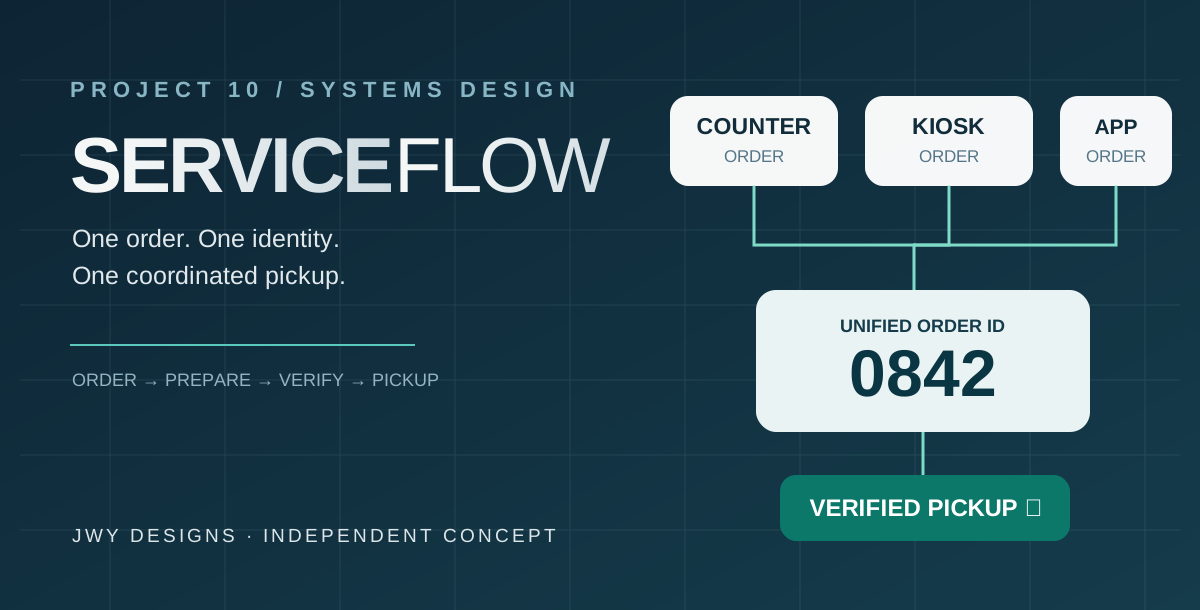
Three ways to order. One coordinated handoff.
An integrated quick-service experience connecting customer flow, order identity, staff workflows, preparation logistics and reliable pickup.
Jason Young · Systems Design / Service Design / Operational Logistics · October 2026
At a compact downtown Kitchener Tim Hortons, a long assisted-order queue ran alongside a mixed crowd of customers who had already ordered. Kiosk and mobile customers could identify their transactions on a digital screen; counter customers were often called by the contents of their purchase.
Two people ordering the same items could respond to the same announcement. Meanwhile, kiosk and counter traffic converged with circulation toward a west-side exit, all within a restricted footprint.
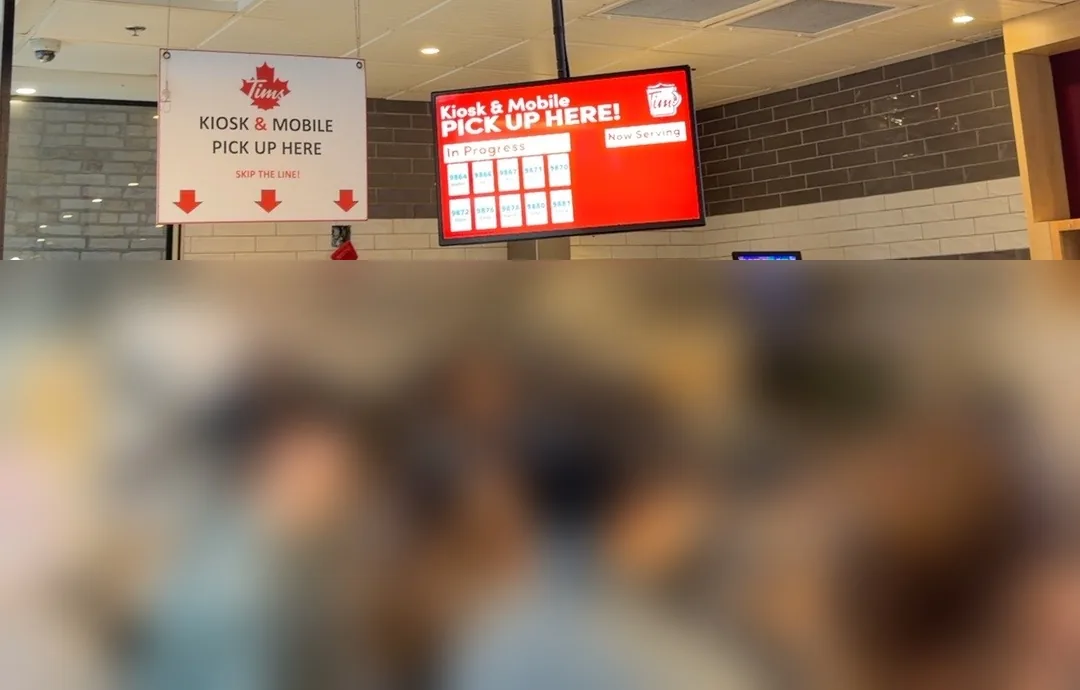
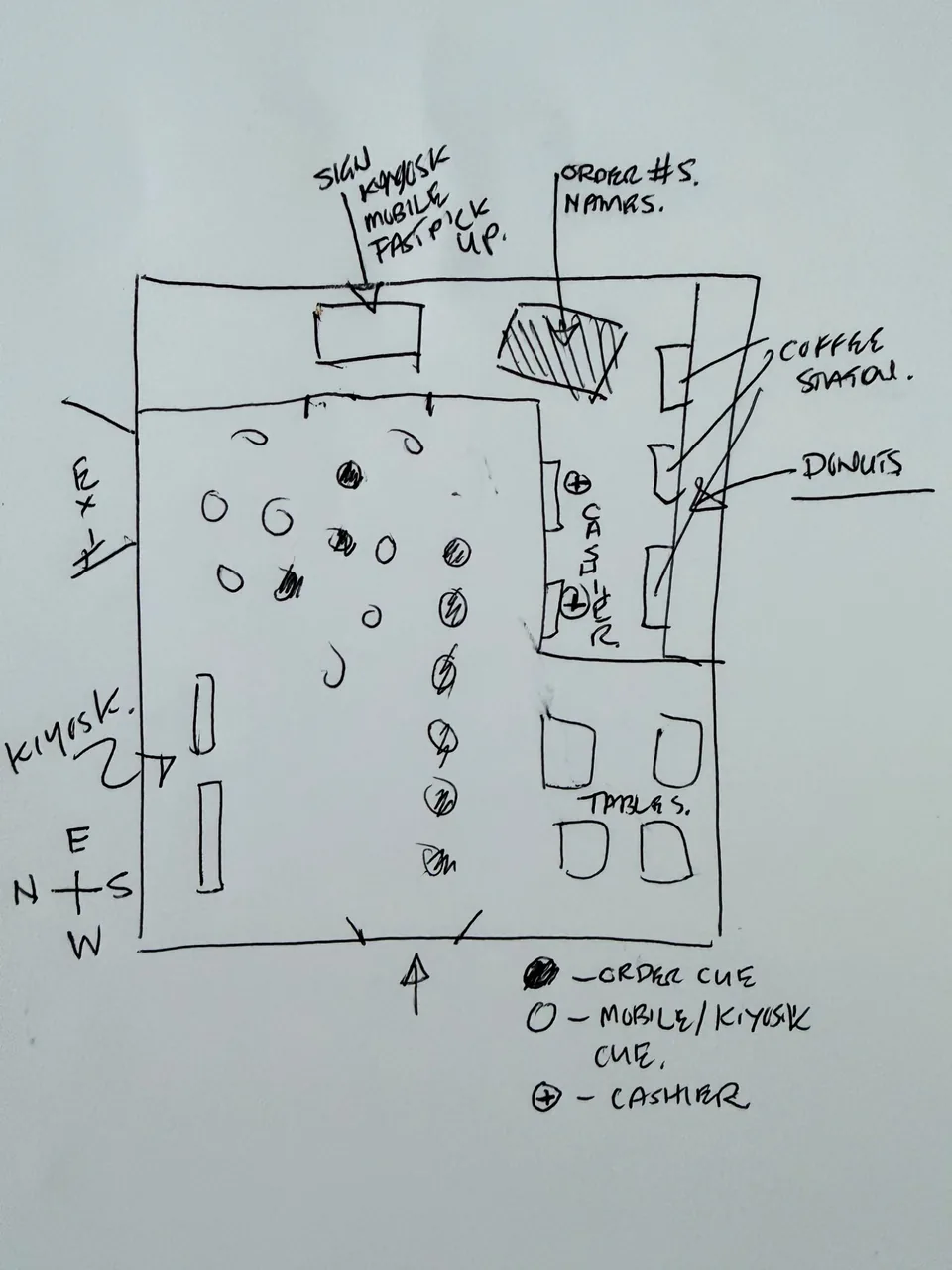
Waiting-to-order and waiting-to-collect customers occupy nearby circulation space, reducing clarity and increasing perceived congestion.
Digital customers see identifiers; assisted-counter customers may have to recognize a spoken list of purchases.
One kiosk was unoccupied during the observation, but the shared pickup and preparation process still required coordination.
Evidence boundary: These findings come from an independent observational visit and documented sketches, not a formal traffic count, employee interview, POS audit or measured wait-time study.
The progression begins with the observed service problem, moves through the integrated systems redesign, and concludes with the proposed future-state experience. The current-state model was reconstructed from site observations and field sketches; the future-state rendering represents design intent rather than an installed solution.
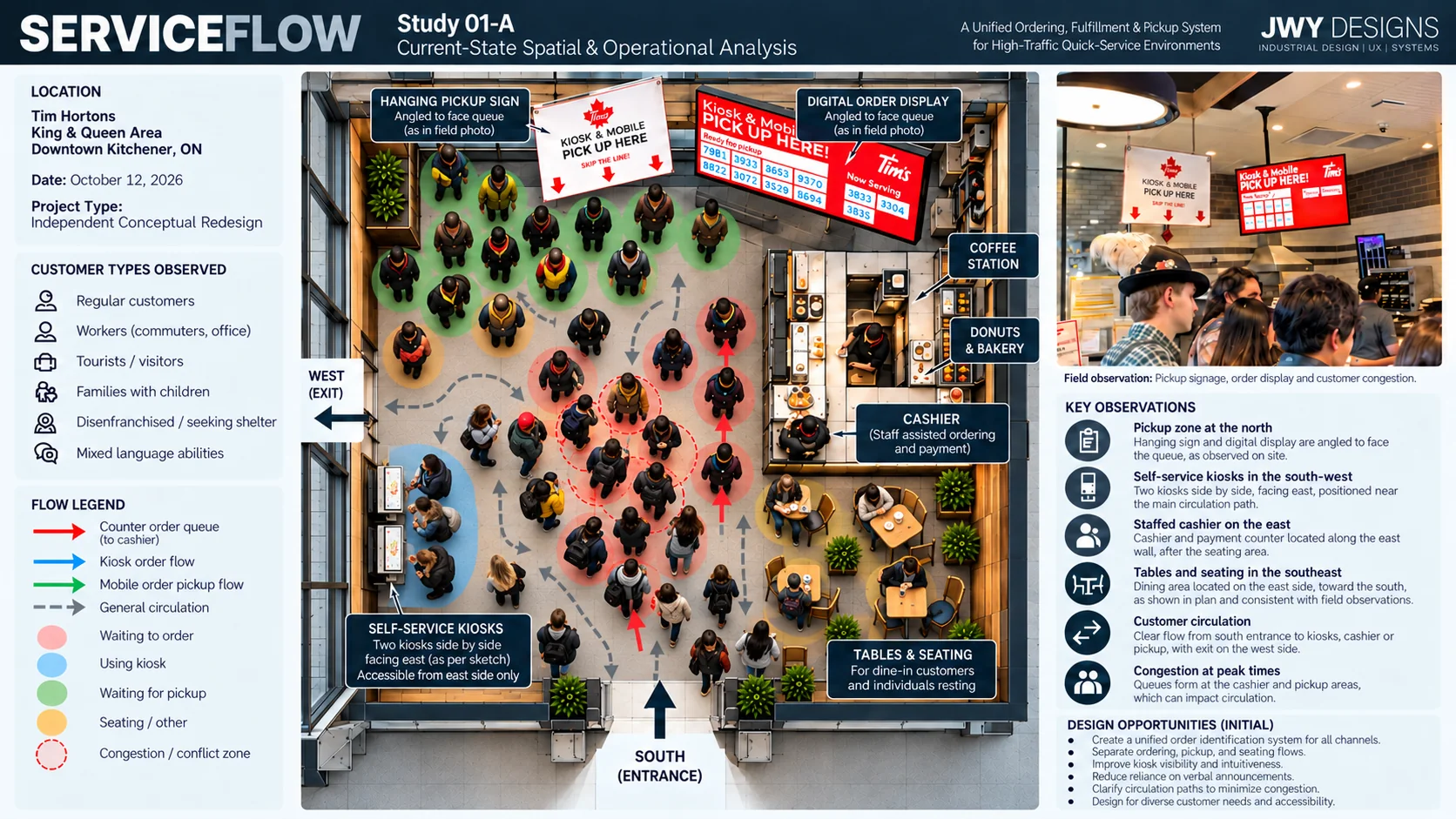
Field-based reconstruction of the compact store: overlapping queues, unclear pickup boundaries and verbal handoff for counter orders.
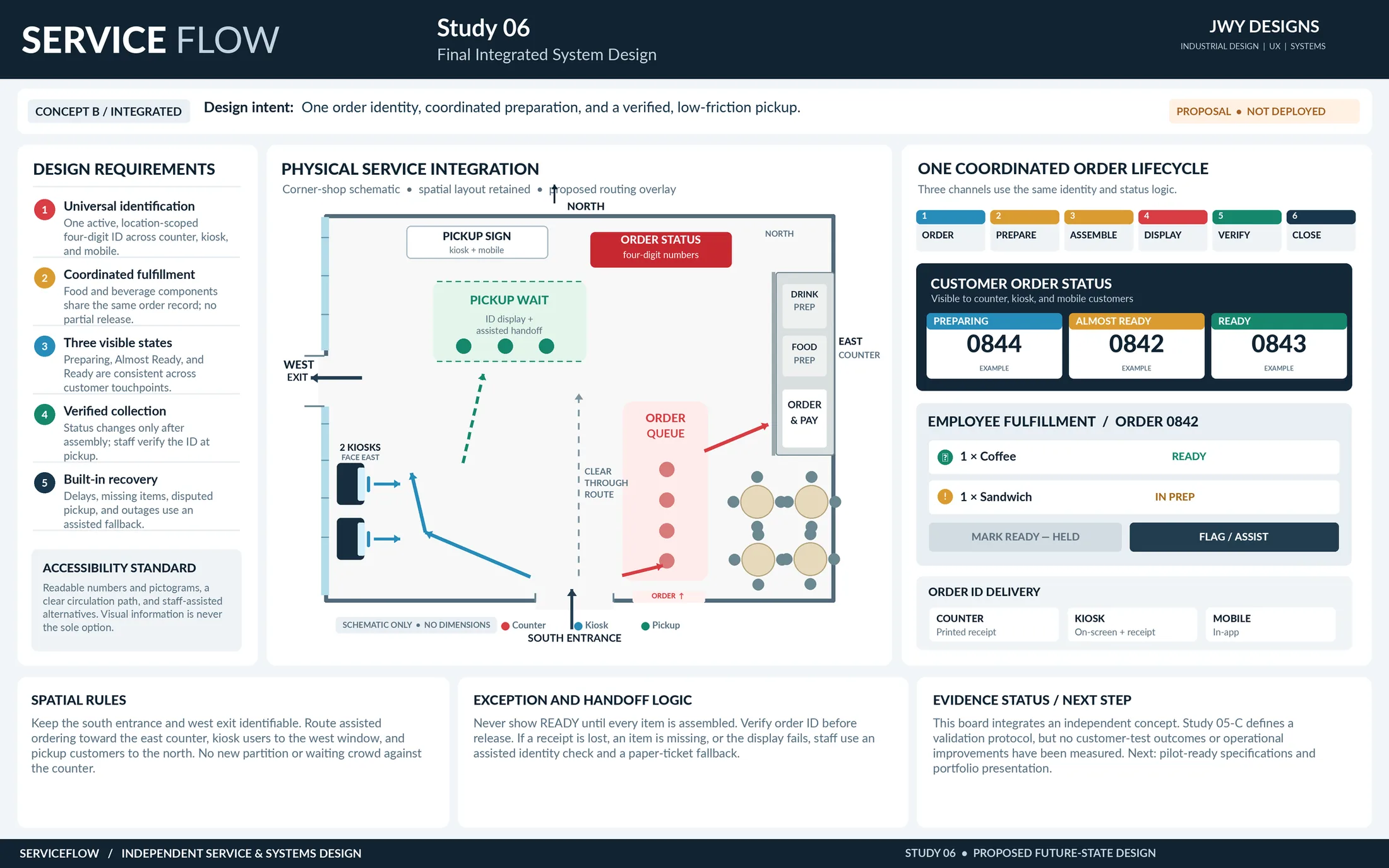
Universal order IDs, shared preparation status, clearer movement paths and verified handoff, designed around the constrained corner-store layout.
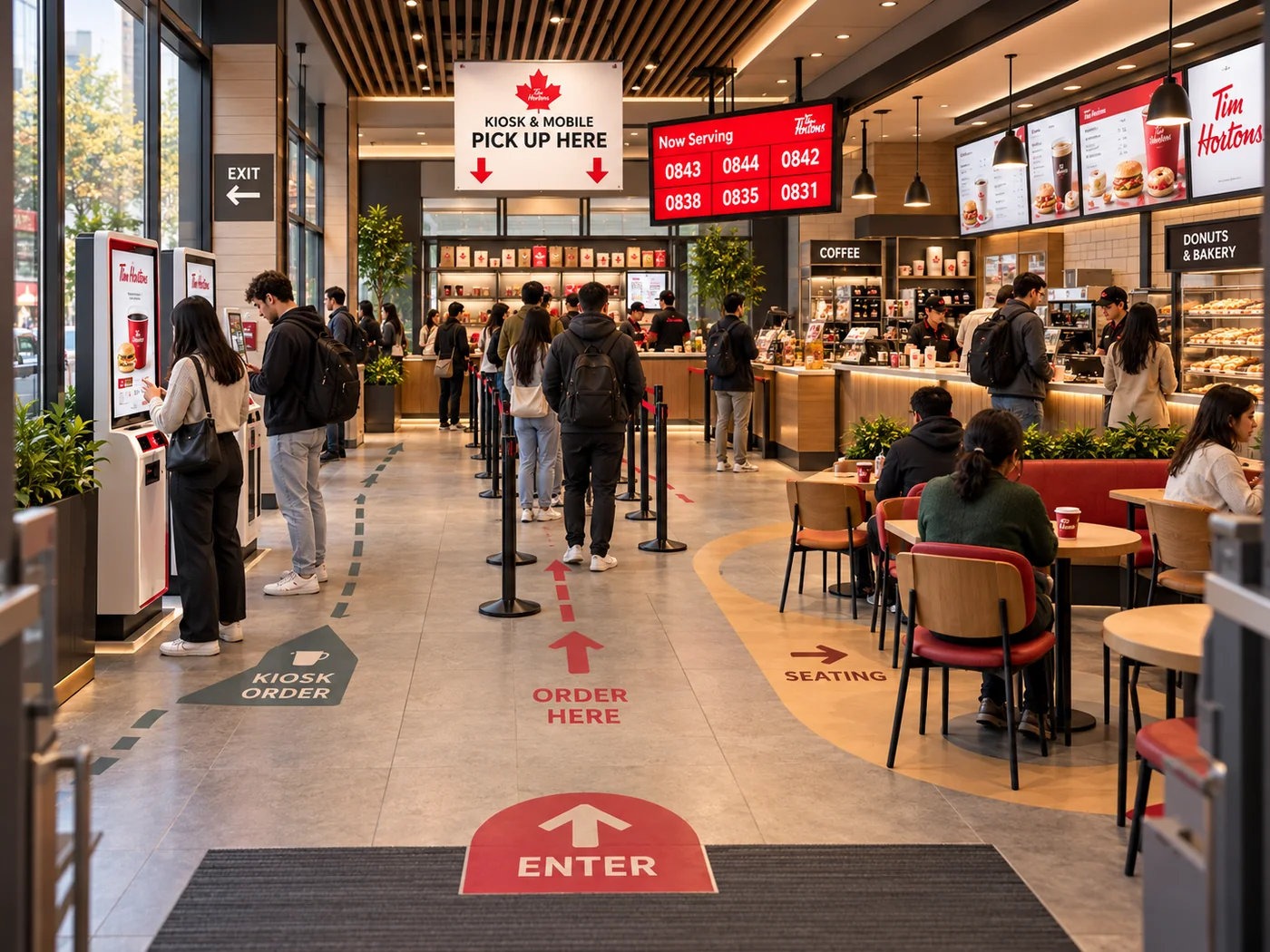
Concept visualization of customer arrival, kiosk use, counter ordering and pickup supported by intuitive physical and digital cues.
Design narrative: The current-state image illustrates the congestion problem; the middle board explains the operational redesign; the final rendering depicts a proposed outcome. Improvements shown are design intentions, not measured field results.
These earlier visualizations document how the research model was corrected. They are not the proposed solution and some early geometry was inaccurate; they are retained transparently as part of the design process.
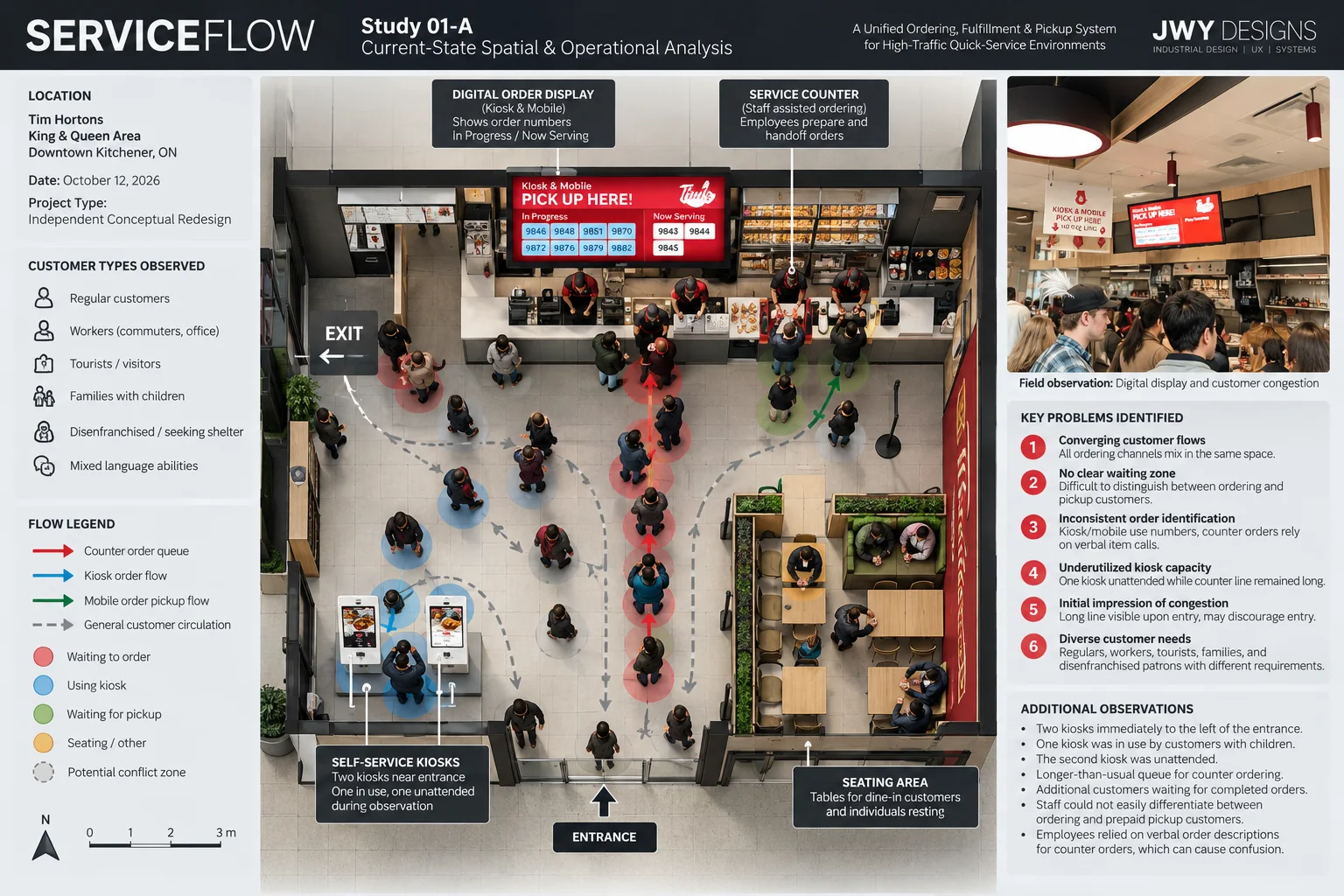
Initial interpretation of the site. Subsequent feedback corrected geometry and crowding.
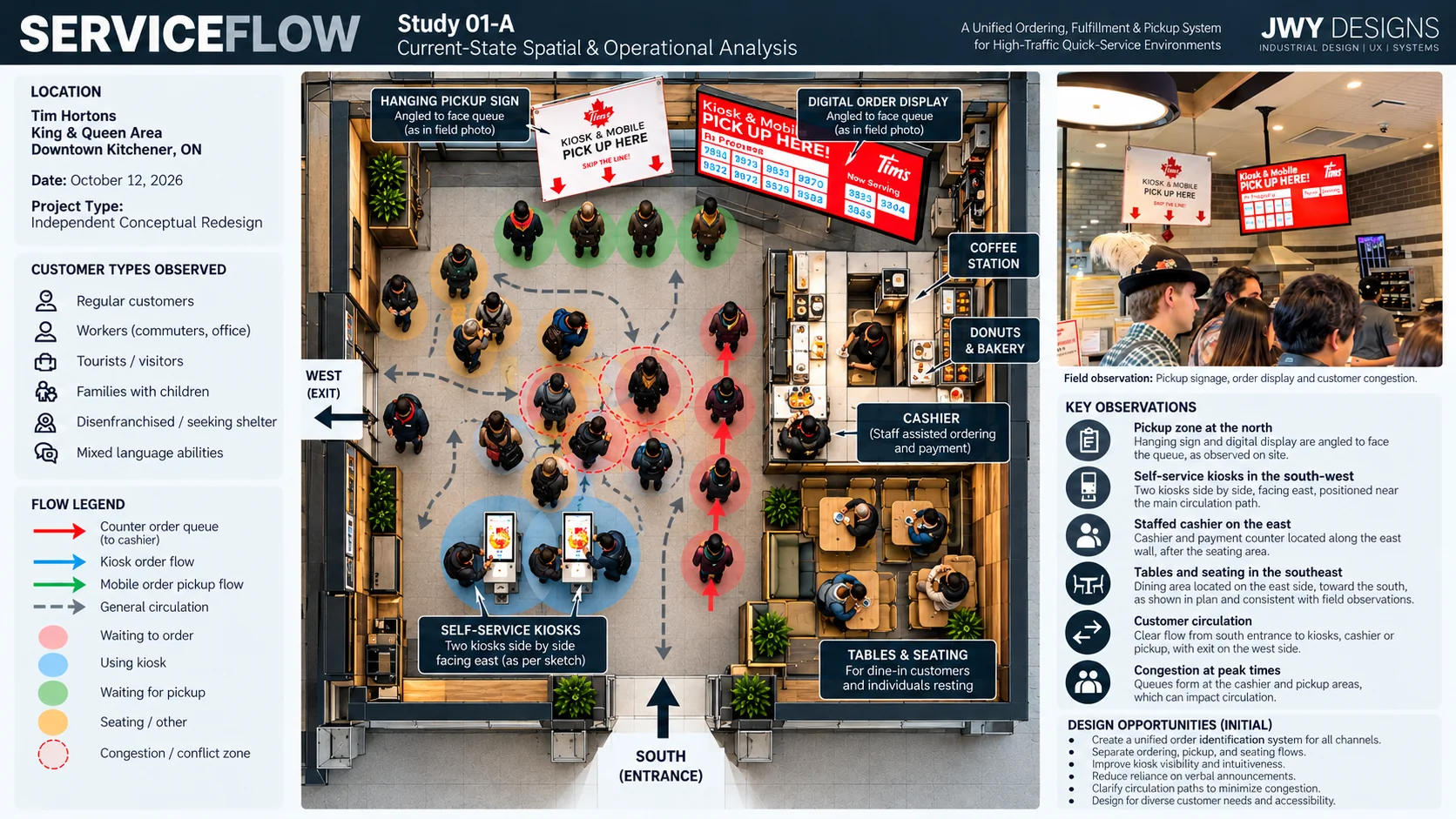
Closer to the observed configuration, with revised counter, kiosk, pickup and circulation relationships.
The opportunity was not to add another ordering channel; it was to coordinate existing channels through one order identity, shared status logic and a predictable physical handoff. The proposed concept is designed around existing site constraints rather than rebuilding the restaurant.
Every order gets a unique active ID with visible options for customers without a smartphone.
Preparation tasks share order records; ready state is withheld until food and beverage assembly is verified.
Maintain the south entrance, west exit, accessible through-route and staff-assisted communication alternatives.
These images illustrate the proposed SERVICEFLOW experience after the current-state analysis and operational architecture work. They show customer guidance, kiosk access, pickup visibility, and verified handoff as conceptual design intent rather than a built or tested installation.
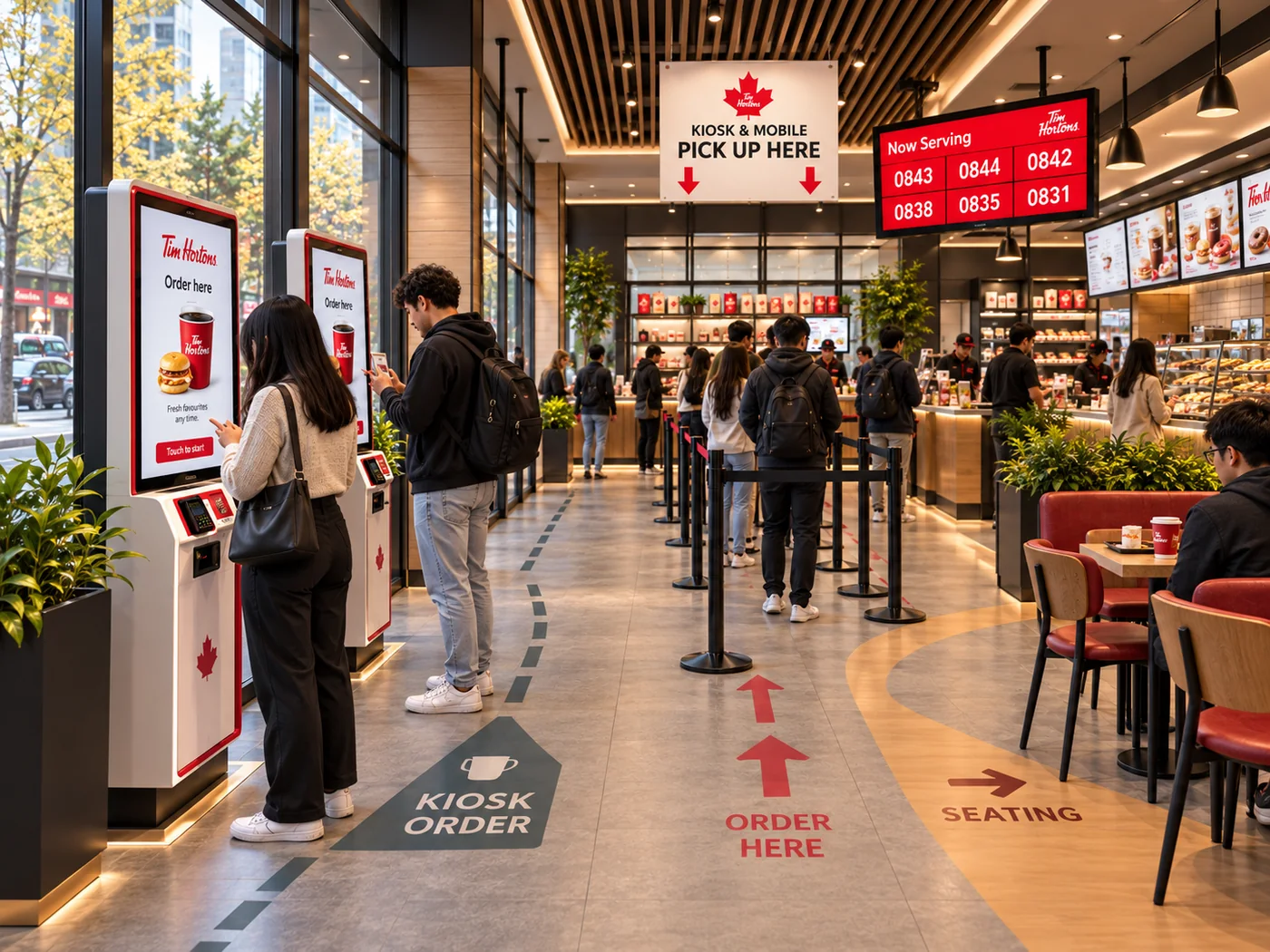
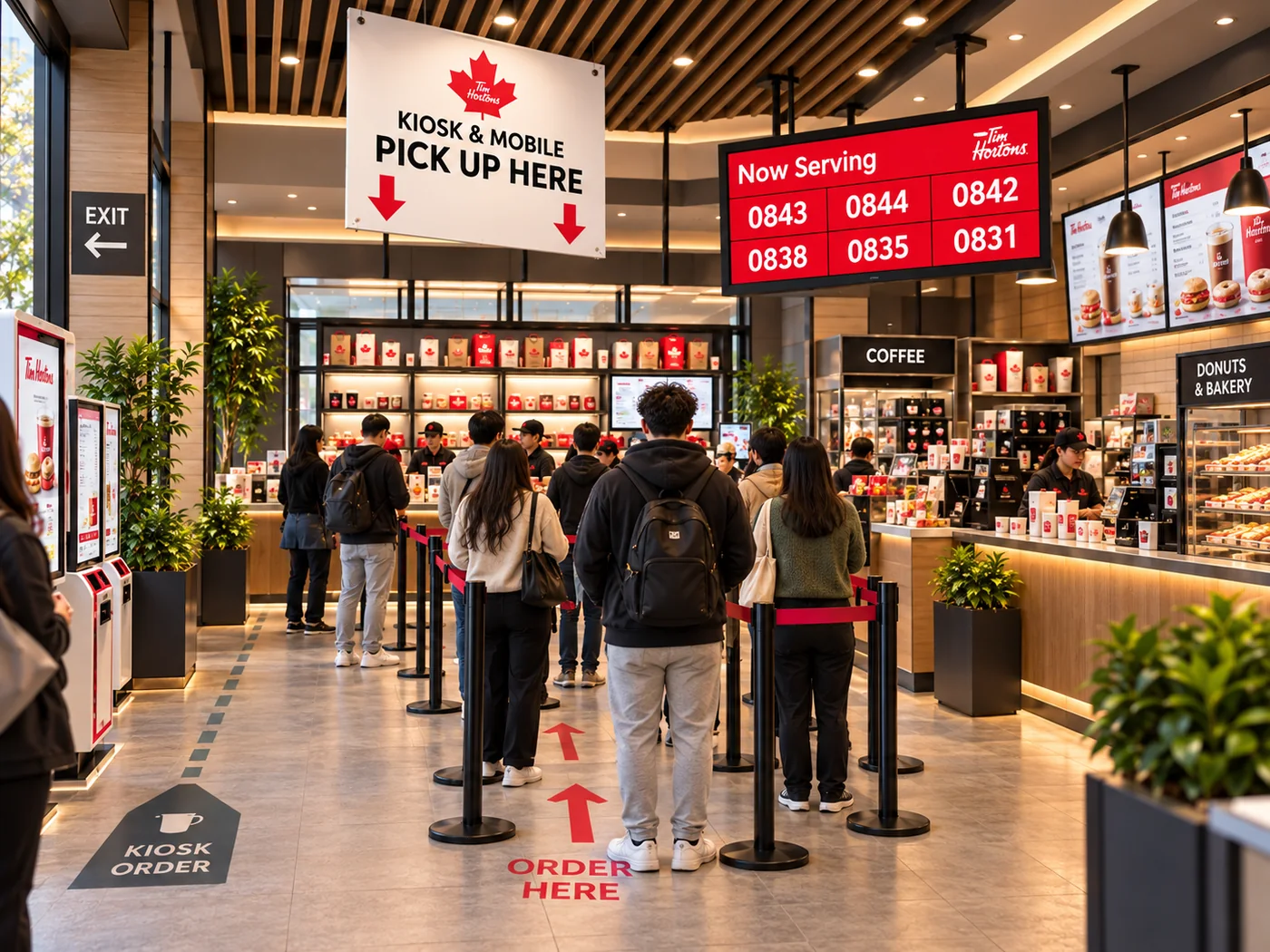
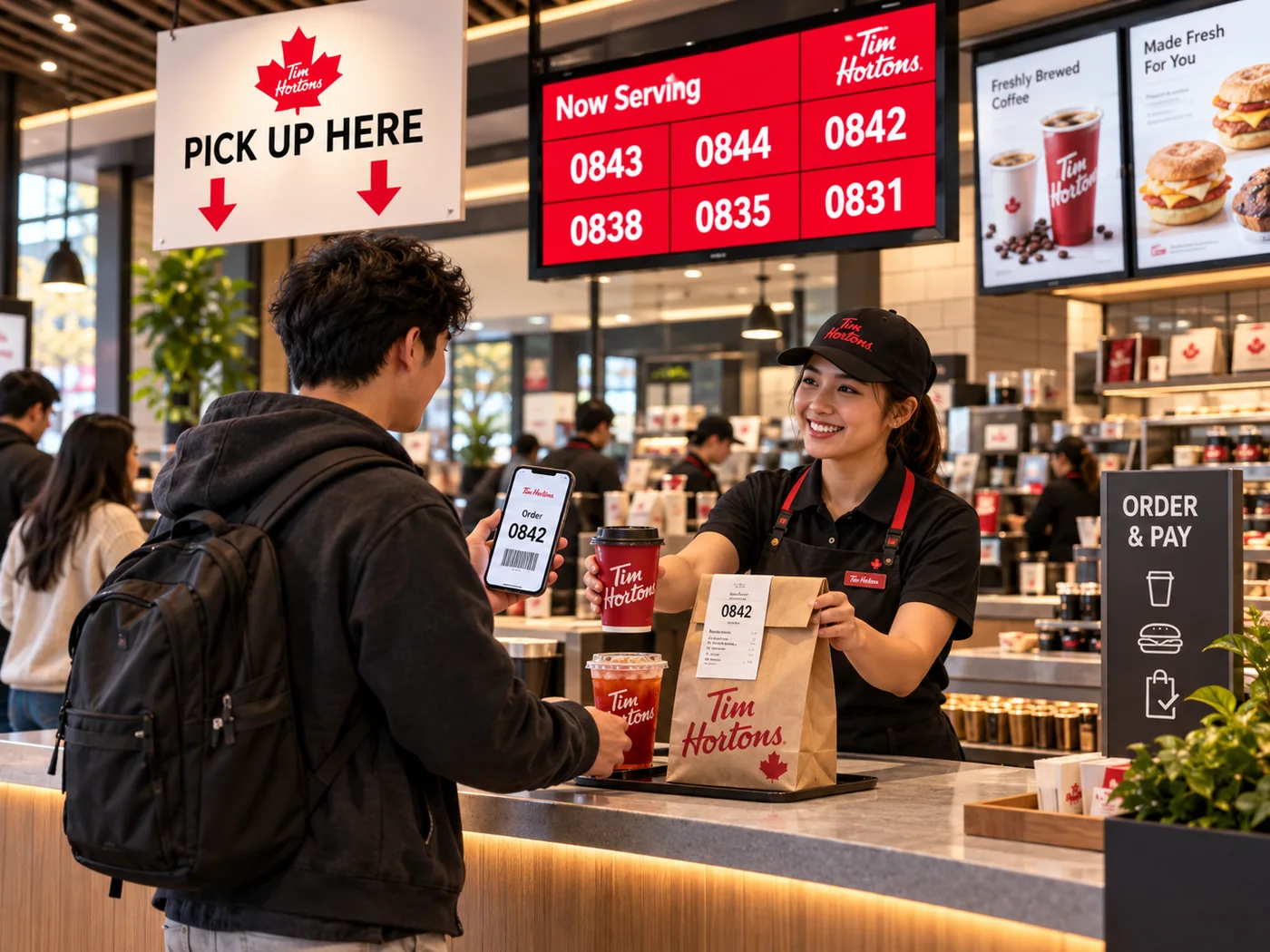
Visualization note: The renderings are illustrative future-state concepts. Some fixtures and photographic details are idealized; the approved systems diagrams define the actual conceptual service logic and spatial constraints.
Customer-facing pickup information uses one unique number and three predictable statuses. The accompanying staff workflow blocks an incomplete order from being marked Ready.
Try the conceptual interaction to see how food and drink completion update order 0842. This demonstration is local to the page: it does not connect to a point-of-sale system or represent a measured usability result.
Handoff safeguard: a matching pickup number is useful for identification, but disputed or lost-ticket cases still require appropriate staff verification.
Waiting on beverage and food. Order cannot be released yet.
Hold or withdraw Ready until corrected, verified and safely handed over.
Two matching food orders retain separate identifiers, eliminating item descriptions as the sole pickup cue.
Use a staffed assistance route with an appropriate transaction identity check before releasing the order.
Keep an accurate customer-facing status while employees resolve the pending item.
Fall back to staff-managed paper tickets tied to the original order identifier.
Use visible wayfinding to keep order queues, pickup waiters and general circulation distinguishable.
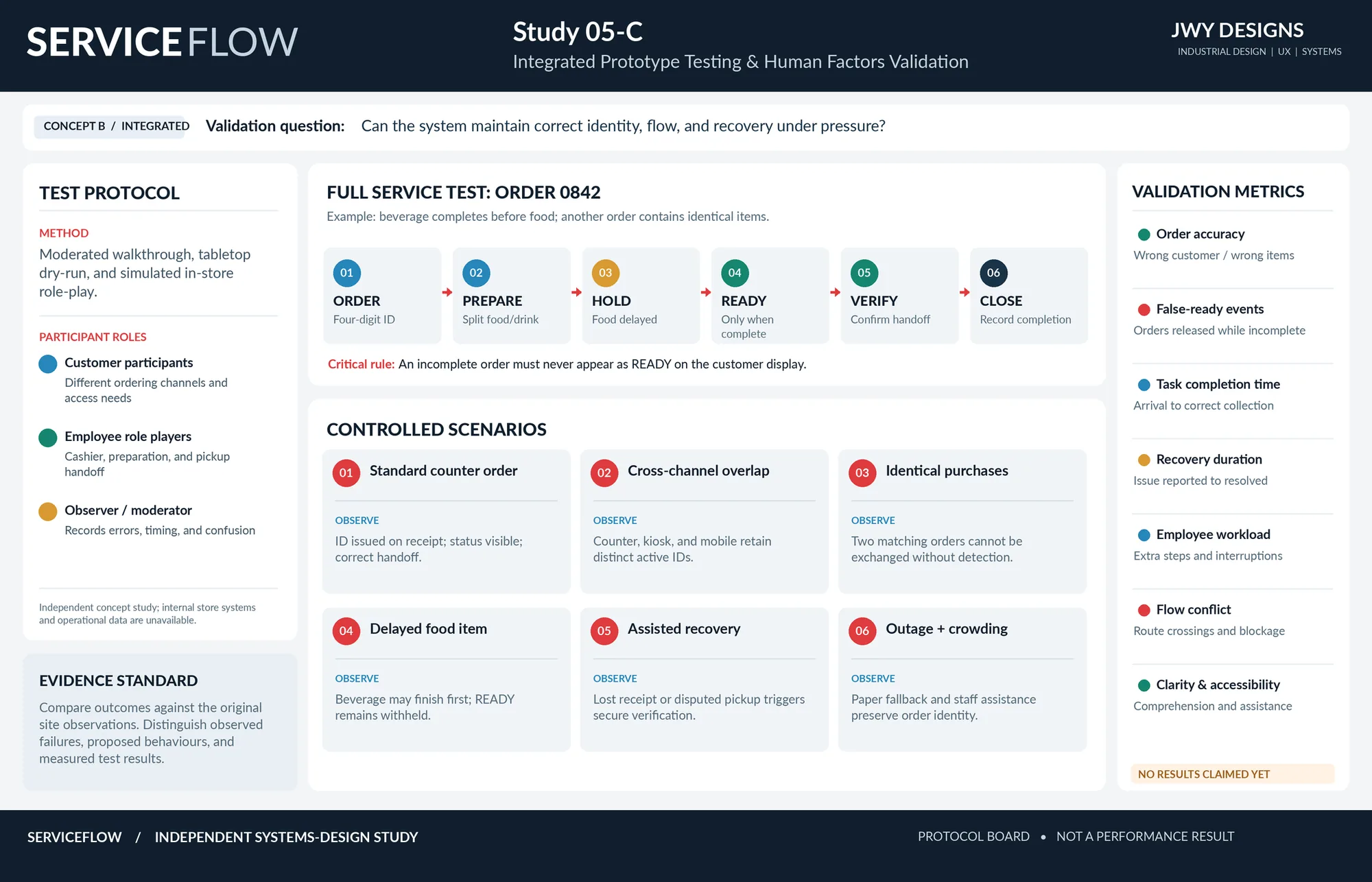
A moderated walkthrough and scenario simulation are specified for six conditions. The design goal is to maintain a correct order identity and prevent incomplete orders from showing Ready, even under pressure.
Verify printed ID, status visibility and handoff.
Check distinct IDs across counter, kiosk and mobile.
Prevent mistaken collection of matching orders.
Keep Ready unavailable until all items are complete.
Resolve missing tickets and disputed handoffs.
Preserve pickup identity using staff and paper fallback.
Testing status: the protocol and scripted scenarios are developed, but participant testing and operational performance measurements have not been completed. Improvements are proposed benefits, not verified outcomes.
Explore the original Study 01-A renderings, then the final future-state views, followed by the system and validation boards.
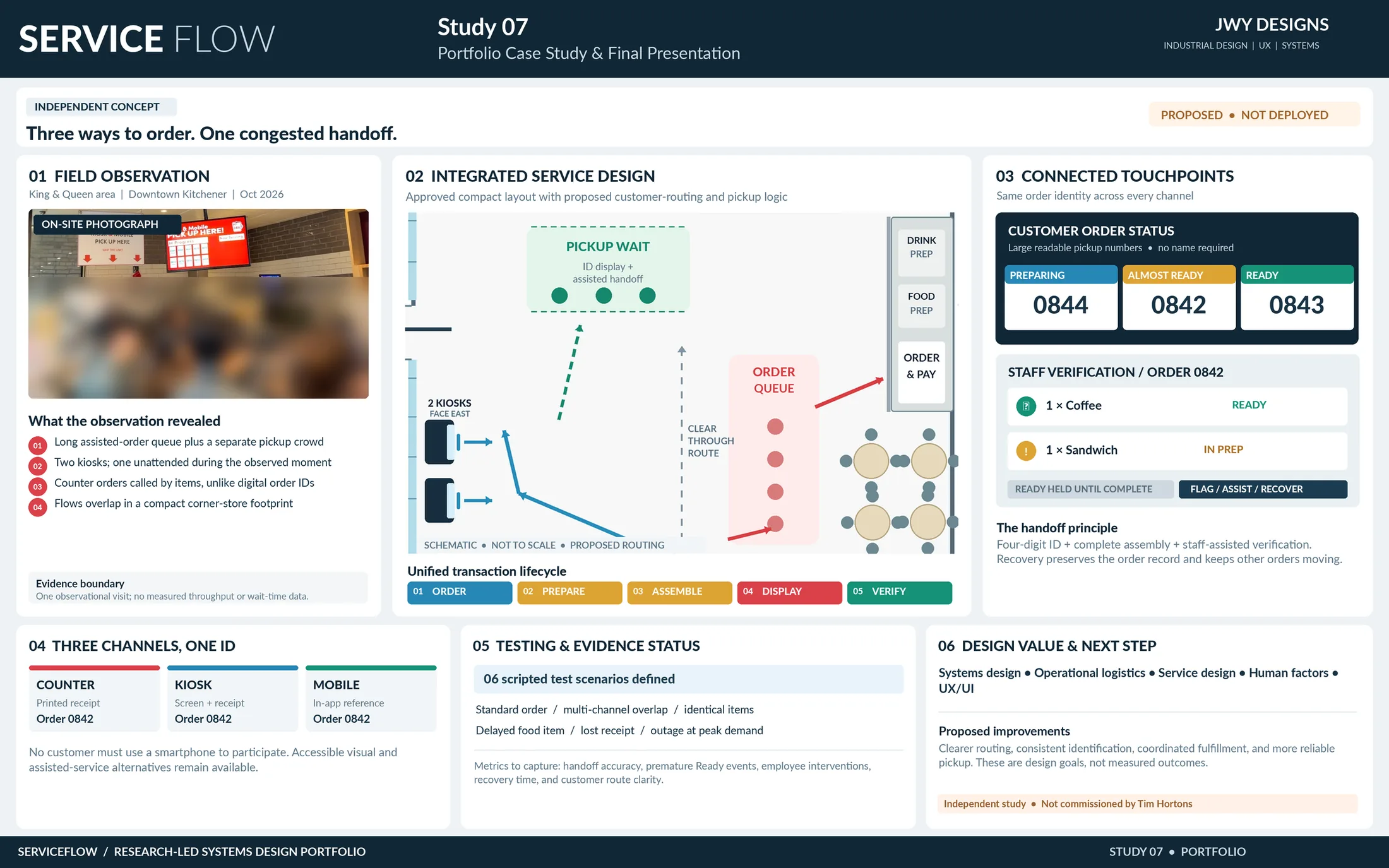
SERVICEFLOW applies systems thinking to an everyday, high-traffic environment: customer circulation, POS information, staff preparation, order identity and physical pickup are treated as one coordinated experience.
Map queues, task dependencies, preparation constraints and recovery paths rather than optimizing a single screen.
Reduce dependence on spoken names, accommodate different abilities and support staff through clear states.
Design one information structure that can connect multiple ordering channels to a trustworthy pickup experience.
Independent conceptual study. Not commissioned by or affiliated with Tim Hortons. Visuals illustrate a design proposal, not a deployed system. No measured outcome claims.